The Problem With Daily Mopping
Every kitchen mops their floors. But mopping moves grease - it doesn't remove it. Over time, a film of emulsified grease builds up across your floor surface, and especially accumulates in the zones where mops can't reach: under equipment, along tile grout lines, in floor drain channels, and in the corners where equipment legs meet the floor.
This isn't just an appearance problem. Grease floor buildup is the #1 cause of slip-and-fall incidents in commercial kitchens, and it's one of the most consistent points of failure on Alberta Health Services inspections.
The High-Risk Floor Zones
Not all floor zones are equal. Here's where grease accumulates fastest - and what it means for your kitchen.
Under Fryers & Range Equipment
Heat + oil mist = rapid accumulation. This zone is also the most common source of grease fires that spread to the floor.
High RiskFloor Drain Channels
Grease solidifies in drain lips and channels. Blocked drains cause flooding and create a direct health code violation.
High RiskUnder Refrigeration Units
Condensation mixes with grease under fridges, creating a wet slick that's invisible until you move the unit.
Medium RiskWall-Floor Junctions & Coved Bases
The curved transition between wall and floor collects grease that standard mops push into but never remove.
Medium RiskEquipment Leg Footprints
Grease pools around equipment legs and carbonizes under the heat of the unit above, creating rock-hard deposits.
High RiskGrout Lines
Tile grout is porous and absorbs grease at the surface level. After months, grout becomes saturated and black - and nearly impossible to clean without professional tools.
Medium Risk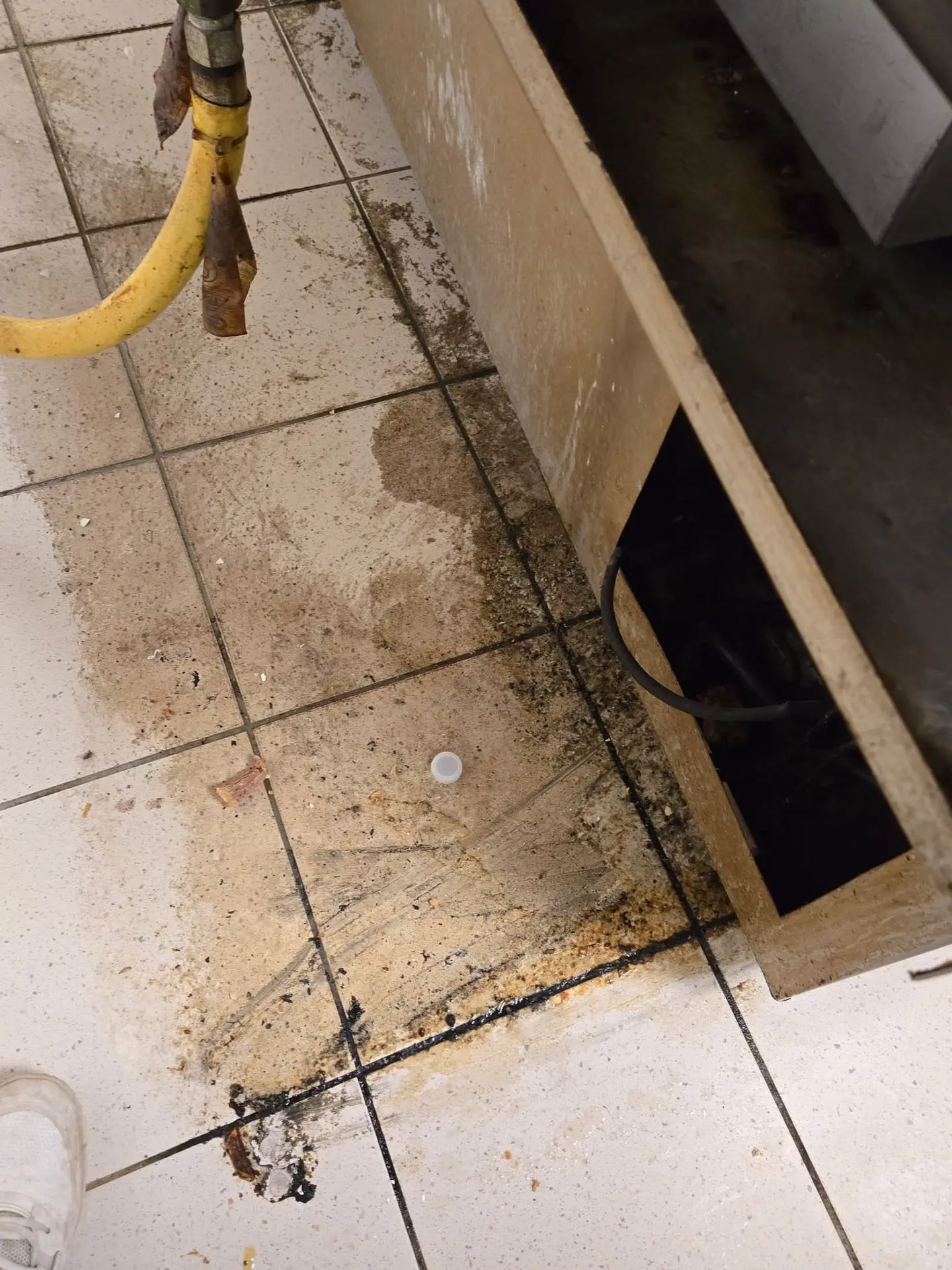
KL Cleaning's Floor Degreasing Process
Our process treats your floor as a system - not just the open walking surface. Here's exactly what happens on every floor job.
Equipment Move & Zone Mapping
We move portable equipment to access underneath. All zones are mapped for priority treatment before any chemical is applied.
Floor Drain Clearing
Drains are cleared and drain channels are scraped and treated before floor work begins - blocked drains undermine everything else.
Heavy-Degreaser Dwell Application
Commercial-grade alkaline degreaser is applied floor-wide, with extra concentration in the high-risk zones. Dwell time is strictly observed - rushing this step is the most common mistake we see.
Mechanical Scrubbing & Grout Work
Rotary floor machine on open areas. Handheld tools on grout lines, edges, and wall bases. This is where the work actually happens.
Hot Water Rinse & Wet-Vacuum
Hot water rinse removes all dissolved grease and chemical residue. Wet-vacuum removes all water to prevent mineral deposit rings.
Final Inspection & Documentation
We walk the floor with you before we leave. On request, we can provide a written service record for your inspection documentation file.
Floor Degreasing Frequency Guide
How often you need professional floor degreasing depends on your kitchen's volume and food type. Our full deep clean frequency guide covers this in detail, but here's a quick floor-specific guide:
- High-volume fry/grill operations: Monthly professional degreasing
- Mid-volume full-service restaurants: Every 6–8 weeks
- Cafés, bakeries, lower-volume kitchens: Every 3 months
- Any kitchen before a known inspection: Regardless of schedule
Related reading: stainless steel restoration · health inspection checklist · exhaust hood grease cleaning